

Introduction
In 2026, investors across the United States, UK, and global markets are once again asking a familiar but important question: is gold a safe investment in 2026? With inflation proving more persistent than expected, interest rates remaining uncertain, geopolitical tensions reshaping global trade, and concerns around currency stability, gold investment in 2026 has returned to the center of serious financial discussions.
Search interest around terms such as gold investment 2026, gold price forecast 2026, and safe investment options during inflation reflects a broader shift in investor psychology. After more than ten years of working closely with investment research, portfolio construction, and long‑term asset behavior, I can say confidently that gold is neither a magic solution nor an outdated relic. Its value lies in how, when, and why it is used.
This article offers a complete expert analysis of gold as an investment in 2026 including performance expectations, risks, macroeconomic drivers, and practical portfolio use written for investors who want clarity rather than hype.
What Does “Safe Investment” Really Mean?
A safe investment is often misunderstood as one that never falls in price. In professional finance, safety is defined differently. A relatively safe asset is one that preserves purchasing power, reduces overall portfolio volatility, and performs differently from high‑risk assets during periods of stress.
Gold historically fits this definition better than most assets. It is scarce, globally recognized, and not directly tied to the financial health of any single government, company, or currency system. These characteristics explain why central banks, sovereign funds, and institutional investors continue to hold gold even in a modern, digital financial system.
Macroeconomic Factors Supporting Gold in 2026
Inflation and Purchasing Power
Inflation remains one of the strongest arguments for owning gold. When the cost of living rises faster than wages and savings return, fiat currency loses real value. Gold has historically helped offset this erosion, particularly during periods when inflation is unpredictable or poorly controlled.
In 2026, while inflation may not be at crisis levels everywhere, its persistence has weakened confidence in long‑term currency stability. This environment tends to favor gold as a defensive allocation.
Interest Rates and Monetary Policy
Gold does not generate income, so it competes with interest‑bearing assets. When real interest rates are high, gold often underperforms. When real rates fall or become negative, gold becomes more attractive.
Current monetary conditions suggest that while rates may remain elevated in the short term, long‑term certainty is limited. This uncertainty alone supports gold’s relevance as a hedge.
How Gold Has Performed Historically
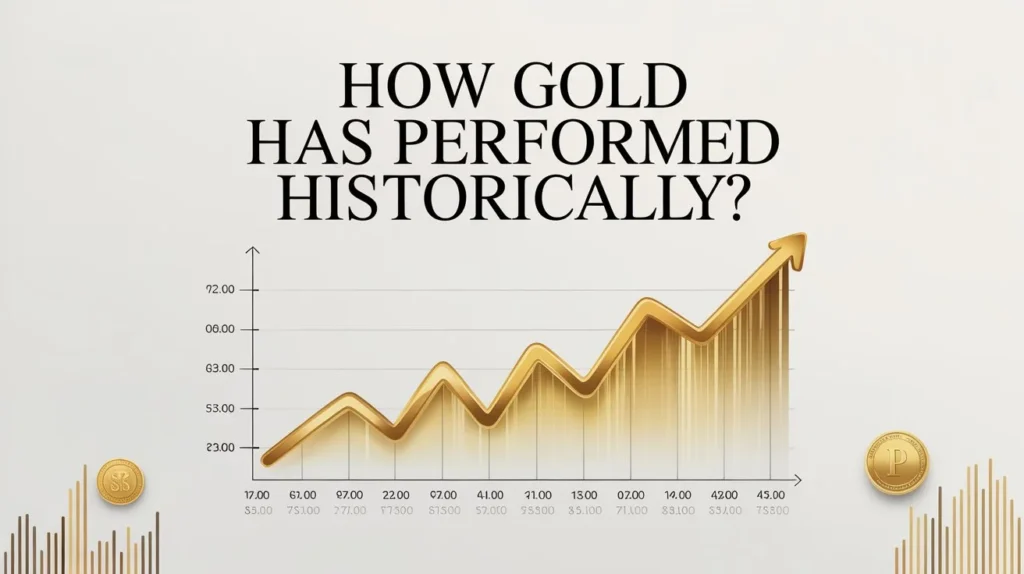
Looking back over multiple decades, gold has shown a consistent pattern: it underperforms during strong economic expansions but performs well during crises, recessions, and periods of monetary instability.
Gold should not be evaluated like growth stocks. It is a portfolio stabilizer, not a return maximizer. Investors who understand this distinction tend to use gold more effectively and avoid disappointment.
Expected Returns From Gold in 2026
Professional forecasts for gold in 2026 generally point to moderate returns rather than explosive growth. Gold is unlikely to outperform equities in a strong bull market. However, it remains well positioned to protect capital if volatility increases.
For long‑term investors, the true value of gold lies not in annual returns but in reducing drawdowns and smoothing portfolio performance over time.
Key Risks of Investing in Gold
Price Volatility
Although gold is considered defensive, its price can fluctuate significantly in the short term due to currency movements, speculative trading, and geopolitical events.
Opportunity Cost
Money invested in gold is capital not invested in productive assets such as businesses or bonds. During extended growth cycles, this opportunity cost becomes more noticeable.
Psychological Risk
Gold is often bought emotionally during crises and sold prematurely during calm periods. Discipline is essential when holding gold.
Gold’s Role in a Diversified Portfolio
From a professional asset‑allocation perspective, gold works best as a supporting asset, not a core growth driver. Most long‑term portfolio models suggest an allocation of 5% to 10% depending on risk tolerance and investment goals.
This level is usually sufficient to provide diversification benefits without significantly reducing growth potential.
Who Should Consider Gold in 2026?
- Gold may be suitable for investors who:
- Want protection against inflation and currency risk
- Prefer long‑term capital preservation
- Hold diversified portfolios and seek stability
- Are concerned about systemic financial risks
Gold may be less suitable for investors who rely on regular income or pursue aggressive short‑term growth strategies.
Expert Verdict: Is Gold a Safe Investment in 2026?
Based on long‑term data, macroeconomic conditions, and professional portfolio strategy, gold in 2026 remains a reliable defensive asset when used correctly.
Gold is not designed to make investors rich quickly. Its strength lies in protection, balance, and resilience during uncertain times. Investors who treat gold as insurance rather than speculation tend to benefit most.
Final Conclusion
So, is gold a safe investment in 2026? The answer is yes when it is used with realistic expectations and proper allocation.
Gold continues to play a meaningful role in modern portfolios by protecting purchasing power, reducing volatility, and providing diversification. In an uncertain global environment, those qualities remain just as valuable today as they have been for centuries.
1️⃣ World Gold Council
2️⃣ Federal Reserve (FRED)
FAQs
Is gold a safe investment in 2026?
Yes, gold is considered a relatively safe investment in 2026, especially as a hedge against inflation, currency weakness, and market volatility. It is most effective when used as part of a diversified portfolio rather than a standalone investment.
Is gold better than cash in 2026?
In high-inflation environments, gold often preserves purchasing power better than cash, which can lose value over time due to inflation.
Can gold prices fall in 2026?
Yes, gold prices can experience short-term declines due to interest rate changes, strong currencies, or reduced demand. However, long-term collapses in gold value are historically rare.
How much gold should an investor hold in 2026?
Most financial experts suggest allocating 5%–10% of a portfolio to gold, depending on individual risk tolerance and financial goals.
Is gold a good investment for retirement portfolios?
Gold can add stability to retirement portfolios when used in moderation, particularly during periods of economic uncertainty.
Disclaimer
This content is for educational purposes only and does not constitute financial advice. Always consult a licensed financial advisor before making investment decisions.






Leave a Reply