
Navigating the labyrinthine world of healthcare finance can feel like a daunting task, particularly when faced with the critical decision of choosing the right health insurance plan. In an era where unforeseen medical expenses can derail even the most meticulously planned financial strategies, understanding Health Insurance Plans 2026: Coverage, Costs, and What to Look For is not just prudent it’s imperative.
For investors, in particular, the implications extend beyond immediate medical needs, touching upon wealth preservation, risk management, and long-term financial stability. This comprehensive guide aims to demystify the complexities, providing a robust framework for making informed decisions about health insurance in 2026.
Key Takeaways
- Understand Core Components: Grasp the definitions of premiums, deductibles, copayments, and coinsurance as they are fundamental to assessing overall costs.
- Evaluate Plan Types: Differentiate between HMOs, PPOs, EPOs, and POS plans to choose a structure that aligns with healthcare preferences and network needs.
- Leverage Enrollment Periods: Be aware of Open Enrollment and Special Enrollment Periods to ensure timely access to coverage or changes in plans.
- Assess Financial Assistance: Explore subsidies, tax credits, Medicaid, and CHIP eligibility to mitigate costs and make plans more affordable.
- Prioritize Essential Benefits: Ensure any chosen plan covers the ten essential health benefits mandated by the Affordable Care Act (ACA).
Understanding the Fundamentals of Health Insurance Plans: Coverage, Costs, and What to Look For
Health insurance serves as a vital financial safeguard, protecting individuals and families from the often-overwhelming costs associated with medical care. It’s an agreement where an insurance company pays for a portion of your medical expenses in exchange for regular payments, known as premiums.
However, the true value of a plan lies in its intricate details: its coverage scope, the associated costs, and the specific features one should scrutinize.
The Core Components of Health Insurance Costs
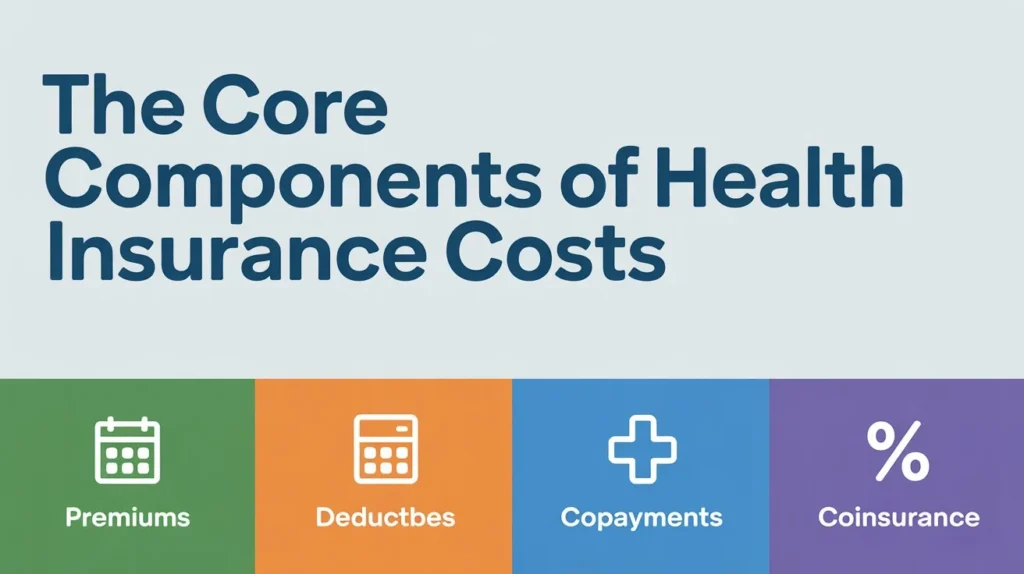
To truly understand the financial implications of Health Insurance Plans: Coverage, Costs, and What to Look For, it is crucial to dissect the primary cost components that define nearly every policy. These elements dictate how much you pay both regularly and when you access care.
- Premium: This is the monthly amount paid to the insurance company to maintain coverage. It’s a non-negotiable cost, regardless of whether you use medical services in a given month. Premiums can vary significantly based on the plan type, your age, location, and family size.
- Deductible: This is the amount you must pay out-of-pocket for covered medical services before your insurance plan begins to pay. For example, if your deductible is $2,000, you’ll pay the first $2,000 of your medical bills for covered services yourself before the insurer starts contributing. Preventive services are often covered before the deductible is met.
- Copayment (Copay): A fixed amount you pay for a covered healthcare service after you’ve met your deductible. For instance, you might pay a $30 copay for a doctor’s visit or a $15 copay for a prescription drug.
- Coinsurance: This is a percentage of the cost of a covered healthcare service you pay after you’ve met your deductible. If your coinsurance is 20%, your insurance company pays 80% of the cost, and you pay the remaining 20%. This continues until you reach your out-of-pocket maximum.
- Out-of-Pocket Maximum (OOPM): This is the most you’ll have to pay for covered services in a policy year. Once you reach this limit, your health insurance plan will pay 100% of the costs for covered benefits for the rest of the year. This crucial safety net protects you from catastrophic medical expenses.
Understanding the Relationship Between Costs:
It’s important to recognize that these cost components are often inversely related. Plans with lower monthly premiums typically come with higher deductibles, copayments, and coinsurance percentages.
Conversely, plans with higher premiums usually offer lower out-of-pocket costs when you receive care. Finding the right balance depends on your expected healthcare usage and risk tolerance.
| Cost Component | Definition | Impact on Out-of-Pocket Spending |
|---|---|---|
| Premium | Monthly payment for coverage | Fixed, recurring cost |
| Deductible | Amount paid before insurance starts paying | High initial hurdle |
| Copayment | Fixed fee per service (after deductible) | Predictable, per-visit cost |
| Coinsurance | Percentage of cost paid (after deductible) | Variable, percentage-based cost |
| OOPM | Maximum annual out-of-pocket payments | Financial safety net |
Exploring Different Types of Health Insurance Plans: Coverage, Costs, and What to Look For
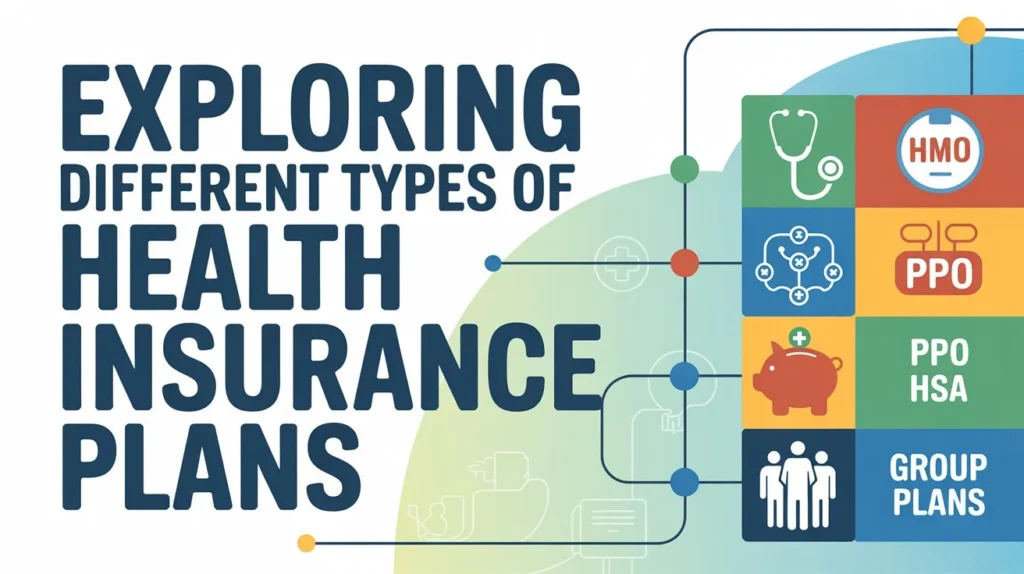
The health insurance landscape offers a variety of plan structures, each with its own rules regarding network providers, referrals, and cost-sharing. Understanding these distinctions is paramount when evaluating Health Insurance Plans: Coverage, Costs, and What to Look For.
Health Maintenance Organization (HMO) 🏥
HMO plans generally have lower premiums and out-of-pocket costs compared to other plan types. However, they typically limit coverage to doctors and hospitals within the plan’s network, except in emergencies.
- Key Features:
- Primary Care Provider (PCP) Requirement: You must choose a PCP within the HMO’s network.
- Referrals: Your PCP must refer you to specialists (e.g., a dermatologist or cardiologist) within the network. Without a referral, the service may not be covered.
- Limited Network: You are generally restricted to providers within the HMO network.
- No Out-of-Network Coverage: Except for emergencies, services received outside the network are typically not covered.
- Best For: Individuals or families who prefer lower premiums, are comfortable choosing a PCP, and don’t mind getting referrals for specialists. They value predictability in costs and are happy to stay within a defined network.
Preferred Provider Organization (PPO) 🩺
PPO plans offer more flexibility than HMOs but usually come with higher premiums. They have a network of preferred providers, but you can also go out-of-network, albeit at a higher cost.
- Key Features:
- No PCP Requirement: You don’t need to choose a PCP.
- No Referrals: You can see specialists without a referral.
- In-Network and Out-of-Network Coverage: You pay less when you use providers in the plan’s network, but you can go out of network for care.
- Higher Out-of-Pocket Costs for Out-of-Network Care: Deductibles, copayments, and coinsurance are typically higher for out-of-network services.
- Best For: Those who value flexibility, want the freedom to choose any doctor or specialist without a referral, and are willing to pay higher premiums for that flexibility.
Exclusive Provider Organization (EPO) 🚪
EPO plans are a hybrid, offering a bit more flexibility than HMOs but with strict network rules.
- Key Features:
- Exclusive Network: You must use doctors and hospitals within the plan’s network, except in an emergency.
- No Referrals: You generally don’t need a referral to see a specialist within the network.
- No Out-of-Network Coverage: Similar to HMOs, services received outside the network are typically not covered, except in emergencies.
- Best For: People who want the freedom to see specialists without referrals but are comfortable staying within a specific network of providers to keep costs lower than a PPO.
Point of Service (POS) 📍
POS plans combine elements of both HMO and PPO plans.
- Key Features:
- PCP Requirement: You usually need to choose a PCP from the plan’s network.
- Referrals: Your PCP refers you to specialists within the network.
- Out-of-Network Option: You can go out of network for care, but you’ll pay more (similar to a PPO).
- Higher Out-of-Pocket for Out-of-Network: Costs are higher when you go out of network, and you might have to handle claim submissions yourself.
- Best For: Individuals who want a PCP to coordinate their care but also desire the option to go out of network for certain services if needed, accepting higher costs for that flexibility.
Each plan type offers a different balance of cost, flexibility, and access to providers. The optimal choice depends on your specific healthcare needs, financial situation, and preferences.
Navigating Enrollment Periods and the Health Insurance Marketplace
Understanding when and how to enroll in Health Insurance Plans: Coverage, Costs, and What to Look For is crucial. Most people obtain coverage through their employer, but for those who don’t, the Health Insurance Marketplace (also known as the exchange) is a primary resource.
Open Enrollment Period (OEP) 📅
The Open Enrollment Period is the annual window during which individuals and families can sign up for, re-enroll in, or change health insurance plans for the upcoming year. For 2026 coverage, this period typically runs from November 1st to December 15th of 2024, with coverage starting January 1st, 2026. Some states may extend their deadlines.
- Key Points:
- Annual Opportunity: This is the main time to enroll if you don’t have coverage or want to change your current plan.
- No Qualifying Life Event Needed: You don’t need a specific reason to enroll or change plans during OEP.
- Critical Deadline: Missing the OEP means you’ll generally have to wait until the next year, unless you qualify for a Special Enrollment Period.
Special Enrollment Period (SEP) ✨
Outside of the Open Enrollment Period, you can only enroll in or change health plans if you experience a “qualifying life event.” SEPs typically last for 60 days following the event.
- Common Qualifying Life Events:
- Loss of Health Coverage: Losing job-based coverage, expiring COBRA, turning 26 and coming off a parent’s plan, or losing eligibility for Medicaid/CHIP.
- Changes in Household: Getting married, having a baby, adopting a child, or death in the family.
- Changes in Residence: Moving to a new state or county where your current plan isn’t available, or moving to a different ZIP code.
- Changes in Income: Changes that affect your eligibility for subsidies or Medicaid.
- Becoming a U.S. Citizen, National, or Lawful Resident.
- Being released from incarceration.
Actionable Tip: If you experience a qualifying life event, act quickly! The SEP window is limited, and missing it could leave you without coverage or the ability to adjust your plan for months.
The Health Insurance Marketplace (Healthcare.gov)
The Health Insurance Marketplace is an online platform where individuals, families, and small businesses can shop for and compare private health insurance plans. It’s also where you can find out if you qualify for financial assistance.
- Key Functions:
- Plan Comparison: Allows you to compare different plans side-by-side based on premiums, deductibles, and benefits.
- Financial Assistance Eligibility: Determines if you qualify for premium tax credits (subsidies) or cost-sharing reductions.
- Variety of Insurers: Features plans from multiple private insurance companies.
- ACA Compliance: All plans offered through the Marketplace are compliant with the Affordable Care Act (ACA), meaning they cover essential health benefits.
State-Based Marketplaces: Some states operate their own health insurance marketplaces (e.g., Covered California, NY State of Health). These function similarly to the federal Marketplace but have state-specific nuances.
Financial Assistance for Health Insurance Plans: Coverage, Costs, and What to Look For
The cost of health insurance can be a significant barrier for many. Fortunately, several forms of financial assistance are available to make coverage more affordable. When considering Health Insurance Plans: Coverage, Costs, and What to Look For, it’s vital to explore these options.
Premium Tax Credits (Subsidies) 💰
Premium tax credits are government subsidies that reduce the amount you pay each month for your health insurance premium. These credits are available to individuals and families with incomes within certain percentages of the Federal Poverty Level (FPL) who purchase plans through the Health Insurance Marketplace.
- How They Work: The credit is based on a sliding scale; the lower your income, the larger your tax credit. You can choose to have the credit paid directly to your insurance company each month to lower your premium, or you can claim the full amount when you file your federal income tax return.
- Eligibility: Primarily based on household income and family size. For 2026, the income thresholds may be adjusted, but generally, individuals with incomes between 100% and 400% FPL may qualify, with expanded eligibility for higher incomes under current legislation [1].
- Important Note: To receive a premium tax credit, you must purchase a plan through the Health Insurance Marketplace.
Cost-Sharing Reductions (CSRs) 📉
Cost-sharing reductions lower your out-of-pocket costs, such as deductibles, copayments, and coinsurance. Unlike premium tax credits, which lower your monthly premium, CSRs reduce the amount you pay when you actually use healthcare services.
- How They Work: If you qualify, you will get a plan with a lower deductible, copayment, or coinsurance. You must enroll in a “Silver” level plan on the Health Insurance Marketplace to receive CSRs.
- Eligibility: Available to individuals and families with incomes generally between 100% and 250% FPL.
- Automatic Qualification: If you qualify for CSRs and select a Silver plan, the reduced costs are automatically applied.
Medicaid and Children’s Health Insurance Program (CHIP) 👨👩👧👦
Medicaid and CHIP are government-funded programs that provide free or low-cost health coverage to millions of Americans.
- Medicaid: Provides comprehensive health coverage to eligible low-income adults, children, pregnant women, elderly adults, and people with disabilities. Eligibility varies by state, especially in states that have expanded Medicaid under the ACA [2]. In expansion states, adults with incomes up to 138% of the FPL are generally eligible.
- CHIP: Provides low-cost health coverage for children in families who earn too much to qualify for Medicaid but cannot afford private insurance. Some states also cover pregnant women through CHIP.
- How to Apply: You can apply for Medicaid and CHIP through the Health Insurance Marketplace, or directly through your state’s Medicaid agency.
Key Financial Strategy for Investors: While these subsidies are primarily aimed at lower to middle-income brackets, investors should be aware of these programs. Understanding the FPL thresholds is crucial, especially during periods of reduced income or when structuring income streams, as it can significantly impact personal healthcare expenditures.
Essential Health Benefits: What Every Plan Must Cover
The Affordable Care Act (ACA) mandates that all health insurance plans offered on the Health Insurance Marketplace and most other plans must cover a core set of “Essential Health Benefits” (EHBs). This ensures a baseline level of comprehensive coverage. When evaluating Health Insurance Plans: Coverage, Costs, and What to Look For, verifying the inclusion and robustness of these benefits is non-negotiable.
The Ten Essential Health Benefits:
- Ambulatory Patient Services: Outpatient care you receive without being admitted to a hospital (e.g., doctor’s office visits, outpatient clinics).
- Emergency Services: Care for sudden medical conditions that require immediate attention (e.g., emergency room visits).
- Hospitalization: Inpatient care for medical or surgical conditions, including overnight stays in a hospital.
- Maternity and Newborn Care: Care before and after your baby is born, including prenatal care, childbirth, and postpartum care for both mother and child.
- Mental Health and Substance Use Disorder Services: Includes behavioral health treatment, counseling, and psychotherapy.
- Prescription Drugs: Coverage for prescription medications. The specific drugs covered can vary by plan (formulary), so it’s important to check if your medications are included.
- Rehabilitative and Habilitative Services and Devices: Services that help people recover from injuries, disabilities, or chronic conditions (rehabilitative) or acquire skills they didn’t have (habilitative), along with devices like wheelchairs or braces.
- Laboratory Services: Diagnostic tests like blood tests, urine tests, and X-rays.
- Preventive and Wellness Services and Chronic Disease Management: Services like screenings (e.g., mammograms, colonoscopies), vaccinations (e.g., flu shots), and counseling to prevent illness. These are often covered at no additional cost even before meeting your deductible.
- Pediatric Services, including Oral and Vision Care: Essential health benefits include dental and vision care for children. Adult dental and vision care are not considered EHBs, though some plans may offer them as additional benefits.
Why EHBs Matter:
The requirement for EHBs ensures that all compliant plans provide foundational coverage, preventing insurers from cherry-picking healthy applicants or excluding vital services. For investors, understanding that these core benefits are guaranteed provides a level of predictability in coverage, allowing for better financial planning around potential healthcare needs.
What to Look For When Choosing Health Insurance Plans: Coverage, Costs, and What to Look For
Selecting the ideal health insurance plan involves a detailed assessment of your personal and family healthcare needs, financial situation, and risk tolerance. Beyond the fundamental costs and plan types, several critical factors warrant close attention when evaluating Health Insurance Plans: Coverage, Costs, and What to Look For.
Provider Network and Access 🌐
- Doctor and Hospital Affiliations: Does your preferred doctor, specialist, or hospital participate in the plan’s network? Verify this directly with your providers and the insurance company.
- Network Size and Type: Is the network extensive enough to meet your needs, especially if you travel frequently or live in an area with limited providers? PPOs generally offer broader networks than HMOs or EPOs.
- Geographic Coverage: If you live in one area and work in another, or have dependents in different locations, ensure the network covers all relevant geographic regions.
Prescription Drug Coverage (Formulary) 💊
- Medication Coverage: Check the plan’s formulary (list of covered drugs) to ensure all your current prescription medications are included. Pay attention to generic vs. brand-name tiers and their associated copays.
- Prior Authorization: Some plans require prior authorization for certain expensive or specialized drugs.
- Mail-Order Options: Does the plan offer convenient mail-order pharmacy services, potentially at a lower cost?
Your Expected Healthcare Usage 📊
- Low Usage (Young, Healthy Individuals): A high-deductible health plan (HDHP) with a lower premium might be suitable. These can be paired with a Health Savings Account (HSA) for tax-advantaged savings.
- Moderate Usage (Periodic Doctor Visits, Chronic Conditions): A plan with a moderate deductible and predictable copayments for office visits might be more cost-effective.
- High Usage (Families with Young Children, Chronic Illnesses): A plan with a lower deductible, lower copayments, and a reasonable out-of-pocket maximum is often preferable, even if it has a higher premium. This strategy minimizes unpredictable costs.
Out-of-Pocket Maximum (OOPM) – Your Financial Safety Net 🔒
- Always understand the plan’s out-of-pocket maximum. This is the absolute most you will pay for covered services in a year, offering crucial protection against catastrophic medical bills. Compare this across plans.
Additional Benefits and Wellness Programs 🧘♀️
- Vision and Dental: Does the plan offer adult vision and dental coverage, or are these separate add-ons?
- Telehealth Services: Many plans offer virtual doctor visits, which can be convenient and cost-effective.
- Wellness Programs: Some plans provide discounts on gym memberships, health coaching, or other wellness incentives.
- Travel Coverage: For frequent travelers, especially internationally, check if your plan offers any global emergency coverage or if you need supplemental travel insurance.
Customer Service and Reputation 📞
- Insurer Reputation: Research the insurance company’s reputation for customer service, claims processing, and provider satisfaction. Online reviews and ratings from independent organizations can be helpful.
- Ease of Access to Information: Can you easily access plan documents, claims history, and customer support?
The Importance of Reviewing Annually
Healthcare needs and financial situations can change. Furthermore, plans themselves change annually (premiums, deductibles, formularies, networks). It’s wise to review your plan during each Open Enrollment Period (OEP) to ensure it still meets your needs for the upcoming year (2026).
Advanced Health Insurance Strategies for Investors
For investors, health insurance is not merely a medical necessity but a critical component of a comprehensive financial strategy. Understanding how to leverage different plan features and related accounts can optimize tax advantages, manage risk, and contribute to long-term wealth accumulation.
Health Savings Accounts (HSAs) 📈
HSAs are powerful, triple-tax-advantaged savings accounts available only to those enrolled in a High-Deductible Health Plan (HDHP).
- Triple Tax Advantage:
- Tax-Deductible Contributions: Money you contribute to an HSA is pre-tax (if through payroll) or tax-deductible (if made directly).
- Tax-Free Growth: The money in the account grows tax-free.
- Tax-Free Withdrawals: Withdrawals are tax-free when used for qualified medical expenses.
- Investment Potential: Unlike Flexible Spending Accounts (FSAs), HSA funds roll over year after year and can be invested, much like a 401(k) or IRA. This makes them a compelling retirement savings vehicle, especially after age 65, when withdrawals for any purpose are tax-free (though non-medical withdrawals would be subject to income tax).
- Ideal for: Investors who are relatively healthy, can afford a higher deductible, and want to use their HSA as an investment vehicle for future healthcare costs or general retirement savings.
Flexible Spending Accounts (FSAs) 💸
FSAs are employer-sponsored accounts that allow you to set aside pre-tax money for qualified medical expenses.
- Key Differences from HSAs:
- “Use It or Lose It” Rule: FSA funds typically expire at the end of the plan year (with some exceptions like a grace period or limited carryover).
- No Investment Option: Funds cannot be invested.
- No HDHP Requirement: Can be paired with any health plan.
- Ideal for: Employees who anticipate predictable medical expenses (e.g., prescriptions, dental work, vision care) and want to save on taxes, but don’t want or qualify for an HDHP/HSA.
Navigating COBRA Coverage
COBRA (Consolidated Omnibus Budget Reconciliation Act) allows eligible individuals to temporarily continue their health coverage when they lose their job or experience other qualifying life events that would otherwise lead to a loss of group health coverage.
- High Cost: COBRA coverage is typically expensive because you pay the full premium, plus an administrative fee (up to 102% of the cost of the plan).
- Temporary Bridge: It serves as a temporary bridge to new coverage, usually lasting 18 to 36 months depending on the qualifying event.
- Consider Alternatives: Before opting for COBRA, investors should compare its cost and benefits with plans available on the Health Insurance Marketplace, especially considering potential subsidies that could make Marketplace plans more affordable.
Long-Term Care Insurance
While distinct from traditional health insurance, long-term care insurance is a crucial consideration for investors planning for future healthcare needs, particularly those associated with aging or chronic conditions requiring assistance with daily activities.
- Covers Non-Medical Care: It typically covers services like nursing home care, assisted living, and in-home care, which regular health insurance and Medicare often do not fully cover.
- Protects Assets: Helps protect your investment portfolio and other assets from being depleted by potentially astronomical long-term care costs.
- Early Planning: Best purchased when you are younger and healthier to lock in lower premiums.
For investors, integrating health insurance decisions with broader financial planning—including retirement, estate planning, and risk management—is essential for safeguarding wealth and ensuring peace of mind.
International Health Insurance Considerations
For investors who frequently travel internationally, hold assets abroad, or reside as expatriates, domestic health insurance plans often fall short. Understanding the nuances of international health insurance is paramount to ensure continuous, comprehensive coverage regardless of geographical location.
Gaps in Domestic Plans 🌍
Most U.S. domestic health insurance plans (HMO, PPO, etc.) offer very limited or no coverage outside the United States. While some may cover emergency care abroad, they typically do not cover routine care, specialized treatments, or medical evacuations.
- Emergency vs. Routine Care: Differentiate between emergency medical needs, which might have some limited coverage, and planned treatments or routine check-ups, which are almost never covered.
- Network Limitations: Domestic networks cease to exist once you cross international borders.
- Medical Evacuation: This critical service, often costing tens of thousands of dollars, is rarely included in domestic plans.
Travel Health Insurance ✈️
Travel health insurance is designed for short-term trips abroad.
- Purpose: Primarily covers medical emergencies, trip interruptions, and sometimes medical evacuations for a defined travel period (e.g., a 2-week vacation).
- Temporary: It’s not suitable for long-term stays or residency abroad.
- Cost-Effective for Short Trips: A wise investment for any international travel to cover unforeseen medical events.
Expatriate Health Insurance 🌐
For individuals living or working abroad for extended periods (e.g., several months to years), expatriate health insurance is the most comprehensive solution.
- Global Coverage: Offers worldwide coverage, often allowing you to choose your doctors and hospitals globally.
- Comprehensive Benefits: Includes emergency care, routine medical visits, hospitalization, prescription drugs, mental health services, and crucial medical evacuation.
- Tailored Plans: Policies can often be customized to include specific regions, add dental/vision, or adjust deductibles and out-of-pocket limits.
- Annual Renewal: Similar to domestic plans, these are typically renewed annually.
Considerations for International Investors
- Asset Protection: A significant medical emergency abroad without adequate insurance can quickly deplete liquid assets or even impact investment portfolios.
- Repatriation and Evacuation: Ensure your policy covers medical evacuation to a facility of choice or repatriation of remains, as these costs are exorbitant.
- Tax Implications: For U.S. citizens living abroad, understanding how foreign earned income exclusions or other tax treaties might interact with health insurance premiums or reimbursements is important.
- Local Healthcare Systems: Research the quality and cost of healthcare in your destination country. Some countries have excellent public healthcare systems that might be accessible to residents, but often expatriate insurance still offers advantages in terms of choice and speed of access.
For investors with a global footprint, meticulously evaluating international health insurance options is not an afterthought but a strategic imperative to protect both personal well-being and financial solvency.
The Future of Health Insurance in 2026 and Beyond
The healthcare and health insurance landscape is in a constant state of evolution, driven by technological advancements, policy changes, and shifting consumer expectations. For investors, understanding these emerging trends in 2026 and beyond is crucial for making informed decisions about their own coverage and for assessing market opportunities or risks within the broader healthcare sector.
Technological Integration and Digital Health 📱
- Telehealth Expansion: The widespread adoption of telehealth (virtual doctor visits) has proven its value in convenience and accessibility. Expect continued integration of telehealth into standard plans, potentially offering specialized virtual clinics and remote monitoring.
- AI and Data Analytics: Artificial intelligence will increasingly be used by insurers for risk assessment, fraud detection, personalized plan recommendations, and streamlining claims processing. For consumers, this could mean more tailored plan options and efficient service.
- Wearable Technology and Preventive Care: Integration of data from wearables (smartwatches, fitness trackers) into wellness programs could lead to personalized incentives for healthy behaviors, potentially impacting premiums or offering unique benefits.
- Digital Front Doors: Insurance companies and providers are investing in intuitive mobile apps and online portals for appointment scheduling, prescription refills, accessing medical records, and managing claims, enhancing user experience.
Policy and Regulatory Changes ⚖️
- Affordable Care Act (ACA) Evolution: While the ACA remains the law of the land, ongoing political discourse means its specific provisions, subsidies, and enforcement could continue to be debated or adjusted. Monitoring these potential changes, especially regarding premium tax credit eligibility and cost-sharing reductions, is important.
- State-Level Innovations: Many states are experimenting with their own healthcare reforms, including public option plans or unique approaches to coverage expansion. These state-specific initiatives could create different market dynamics depending on your location.
- Focus on Price Transparency: There’s a growing push for greater price transparency in healthcare services and prescription drugs. New regulations may empower consumers with more information to compare costs, influencing their choice of providers and plans.
Consumer-Centric Models and Personalization 🎯
- Customizable Plans: Expect to see more flexible and customizable plan options that allow individuals to tailor benefits to their specific needs, moving beyond traditional one-size-fits-all approaches.
- Value-Based Care: The shift from fee-for-service to value-based care models, where providers are rewarded for patient outcomes rather than just the volume of services, will continue. This could lead to more coordinated care and a focus on preventive health.
- Holistic Wellness: Insurance plans may increasingly incorporate benefits beyond traditional medical care, such as mental health support, nutritional counseling, and social determinants of health interventions.
Impact on Investors
For individual investors, these trends mean a continuously evolving landscape for personal health coverage, requiring vigilance during annual Open Enrollment periods. For those investing in the healthcare industry, these shifts present opportunities in digital health startups, health tech companies, and insurers adapting to new models, while also posing risks to traditional models that fail to innovate. Staying informed about these developments will be key to both personal financial well-being and astute investment decisions in 2026 and beyond.
Conclusion
Understanding Health Insurance Plans 2026: Coverage, Costs, and What to Look For is an indispensable aspect of sound financial planning, especially for investors. The complexity of the healthcare system demands a proactive and informed approach, moving beyond simply purchasing a policy to strategically selecting coverage that aligns with personal health needs, financial goals, and risk tolerance.
From deciphering premiums, deductibles, and out-of-pocket maximums to navigating the nuances of HMOs, PPOs, and other plan types, every decision impacts your financial well-being. Leveraging opportunities like Open Enrollment Periods, exploring available financial assistance, and prioritizing essential health benefits ensures you have a robust safety net against unforeseen medical costs.
Furthermore, for the savvy investor, integrating health-related accounts like HSAs into a broader investment strategy can yield significant tax advantages and long-term savings. As the healthcare landscape continues to evolve with technological advancements and policy shifts, continuous education and annual re-evaluation of your coverage remain paramount.
Actionable Next Steps:
- Assess Your Needs: Before the next Open Enrollment Period, meticulously evaluate your family’s healthcare usage from the past year, anticipated needs for 2026, and your financial risk tolerance.
- Compare Plans Meticulously: Use the Health Insurance Marketplace (Healthcare.gov or your state’s exchange) or your employer’s portal to compare various plans. Pay close attention to premiums, deductibles, copayments, coinsurance, and most importantly, the out-of-pocket maximum.
- Verify Networks and Formularies: Confirm that your preferred doctors, specialists, hospitals, and prescription medications are covered by any prospective plan.
- Explore Financial Assistance: If eligible, apply for premium tax credits and cost-sharing reductions to make coverage more affordable.
- Consider HSAs: If you qualify for and select a High-Deductible Health Plan (HDHP), explore opening and contributing to a Health Savings Account (HSA) for its powerful tax advantages and investment potential.
- Stay Informed: Regularly monitor changes in healthcare policy and insurance plan offerings to ensure your coverage remains optimal.
By taking these deliberate steps, investors can transform the daunting task of selecting health insurance into a strategic decision that protects their health, preserves their wealth, and contributes to their overall financial success in 2026 and the years to come.
References
[1] Kaiser Family Foundation. (2025). Explaining the Affordable Care Act’s Premium Tax.
[2] Medicaid.gov. (2025). Medicaid Eligibility. Retrieved from https://www.medicaid.gov/medicaid/eligibility/index.html (Note: Link is illustrative; actual URL may vary or require update for 2026 data.)
[3] Best Insurance Plans for Families in 2026 USA, UK & UAE Guide
FAQs
What are four things you should look at when choosing an insurance plan?
Check the monthly premium, deductible, out-of-pocket maximum, and network of doctors to be sure the plan fits your budget and healthcare needs.
What is considered a high deductible health plan in 2026?
In 2026, a high deductible health plan (HDHP) generally has a deductible of about $1,700+ for individuals or $3,400+ for families, qualifying it for HSA use.
Is it better to have a $500 deductible or $1,000 health insurance?
A $500 deductible is better if you expect frequent medical care, while a $1,000 deductible usually works best if you want lower monthly premiums.
What are the changes in Marketplace insurance 2026?
Marketplace insurance in 2026 includes updated premium subsidies, adjusted plan prices, and expanded preventive care benefits in some states.
How much will Social Security take out for Medicare in 2026?
In 2026, Social Security will deduct the standard Medicare Part B premium, which is expected to be slightly higher than 2025, based on income level.





Leave a Reply