
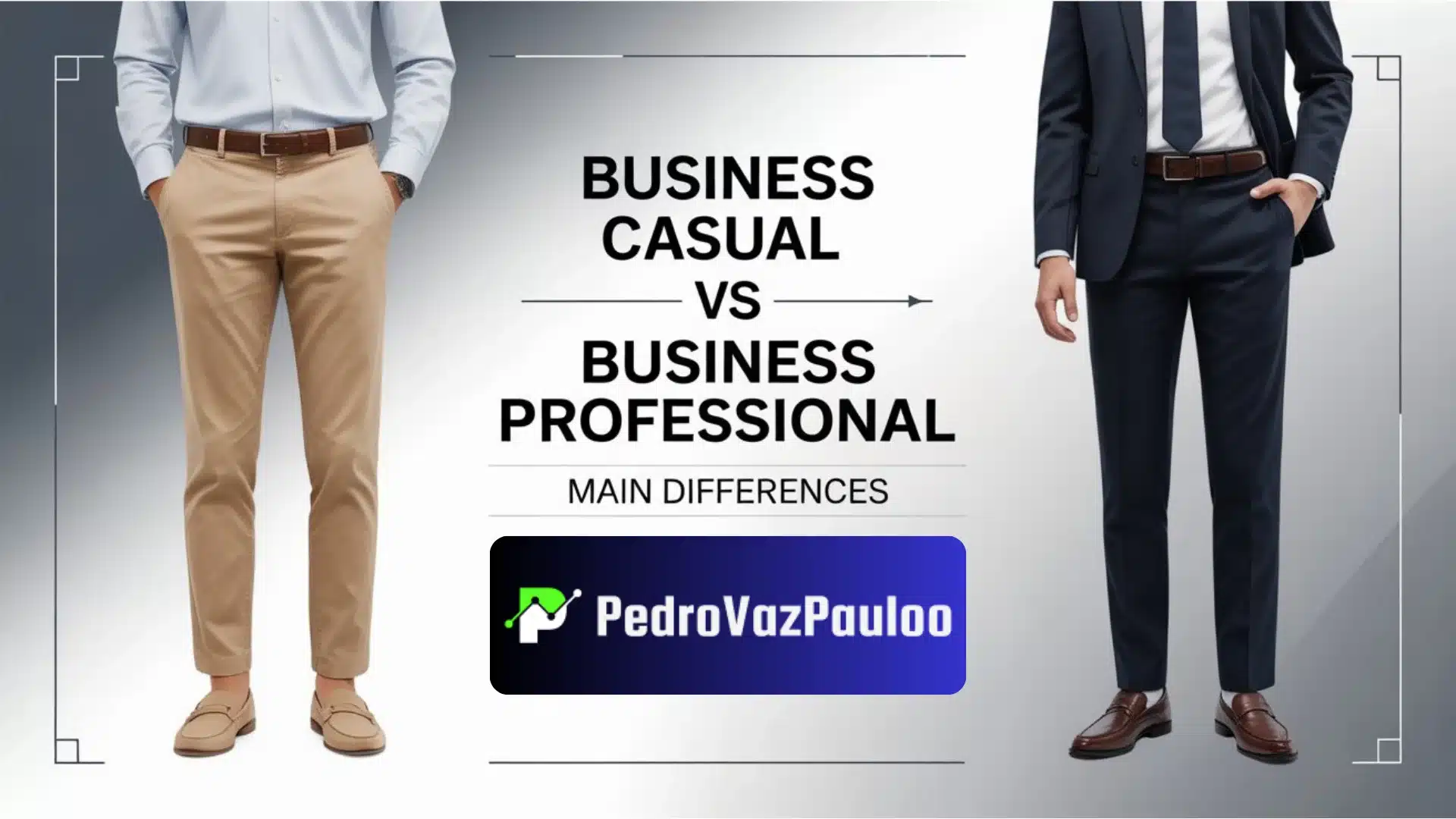
In today’s diverse work environments, understanding the difference between business casual vs business professional dress codes is essential for making the right impression. Whether you’re heading to an important client meeting or navigating your company’s regular office days, choosing the appropriate workplace dress code can impact how others perceive you.
While business professional attire emphasizes formal suits and polished looks, business casual offers a more relaxed yet still neat and respectful style. Knowing when to wear each and recognizing the subtle differences in office wear can boost your confidence and help you fit seamlessly into any corporate attire expectation. Mastering these styles is key to dressing for success.
What is Business Casual?

Business casual is now the go-to dress code for many modern workplaces, especially in creative fields, tech startups, and offices that value comfort and flexibility. It blends traditional business wear with a relaxed touch, avoiding both formal suits and overly casual clothes. This style gained popularity in the 1990s when companies wanted employees to look professional yet feel comfortable. Today, you’ll see business casual everywhere, from New York to Berlin, because of its versatility. Typical business casual attire includes tailored pants or khakis, collared shirts or blouses, optional blazers, and loafers or flats. The look is always neat, clean, and put-together, making it a favorite workplace dress code.
What is Business Professional?
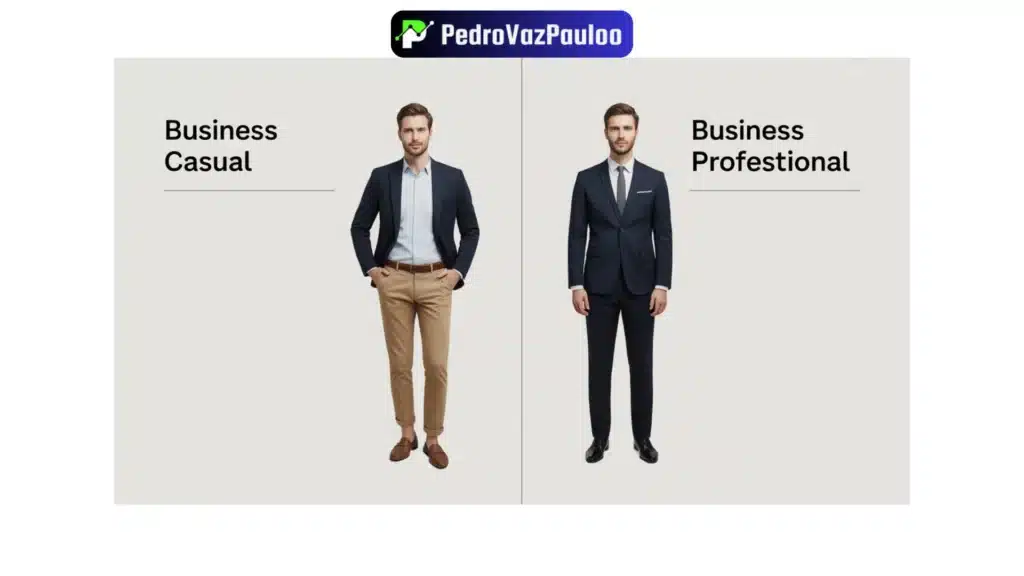
While business casual offers flexibility, business professional represents formality and tradition. It conveys authority, competence, and respect, especially in fields like law, banking, and finance. For men, this means a tailored suit in neutral colors, a crisp shirt, silk tie, and polished leather shoes. Accessories remain simple and understated. For women, it involves a skirt or pantsuit with a modest blouse, closed-toe shoes, and minimal jewelry. Grooming is essential neat hair, subtle makeup, and clean nails. Though styles vary globally, such as in Japan or Europe, the core idea is a polished, elegant look that commands respect and builds trust.
Business Casual vs Business Professional: Main Differences
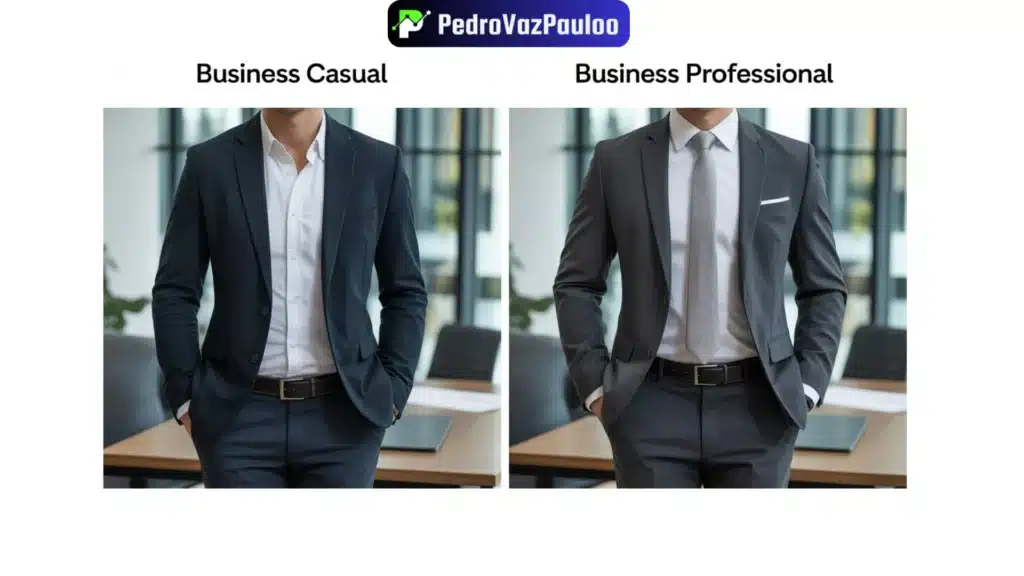
The primary distinction between business casual vs business professional boils down to the level of formality and the impression you want to make. Business professional is all about structure and tradition, while business casual allows for a touch of personality and comfort. Let’s break it down even further:
| Feature | Business Casual | Business Professional |
| Formality | Medium | High |
| Typical Outfits | Slacks, khakis, blouses, polos | Suits, dress shirts, ties, skirts |
| Footwear | Loafers, ballet flats, dress shoes | Leather oxfords, closed-toe heels |
| Accessories | Simple, modest | Minimal, classic |
| Colors & Patterns | More variety, subtle prints allowed | Neutral, solid colors preferred |
| Occasions | Daily office wear, meetings | Interviews, client meetings, presentations |
| Allowed | No tie required, optional blazer | Tie and jacket required |
| Not allowed | Jeans (in most cases), sneakers | Jeans, casual tops, open-toe shoes |
One practical analogy: If business professional is like a black-tie gala, business casual is the smart-casual dinner party. Both require you to look your best, but the rules for one are much stricter than the other.Understanding the main differences is crucial.
Dress codes aren’t just about clothes; they’re about fitting in, showing respect, and reflecting the company’s brand. Wearing the wrong outfit can make you stand out in the worst way, while dressing appropriately helps you blend in and build credibility.
When to Wear Business Casual vs Business Professional
Choosing between business casual and business professional can shape how you’re seen at work. Wear business professional attire for interviews, client meetings, and presentations any time you need to make a strong first impression.
For daily office work, team meetings, or casual Fridays, business casual is usually just right. When unsure, it’s better to dress up a bit more and then adjust once you know your company’s style. This way, you’ll always look confident and fit the workplace dress code.
| Occasion | Recommended Dress Code |
| Job Interview | Business Professional |
| First Day at Work | Business Professional |
| Internal Office Meeting | Business Casual |
| Client Meeting | Business Professional |
| Team Outing | Business Casual |
| Company Presentation | Business Professional |
| Casual Friday | Business Casual |
Global Perspectives on Dress Codes
Dress codes differ greatly around the world. What’s seen as business casual in Toronto could be too informal in Tokyo or too formal in Sydney. In the U.S. and Canada, business casual means dress pants and collared shirts, while the U.K. keeps things more traditional, especially in law and finance. Italy favors stylish touches, Germany prefers classic looks, and Japan sticks to business professional attire.
In the Middle East, modesty shapes workwear, even for business casual. Always check local customs or your company’s dress code guidelines to avoid mistakes. For more, see Forbes’ Dress Code Guide or The Balance Careers Dress Code Advice.
The Psychology of Dressing for Work
The clothes you choose don’t just impact how others see you—they shape how you feel and perform. Studies have shown that dressing in business professional attire can actually boost your confidence, increase abstract thinking, and help you feel more powerful. When you know you look the part, you’re more likely to act the part. Business casual clothing, on the other hand, promotes creativity, openness, and collaboration.
It’s no wonder that startups and tech firms embrace this dress code it encourages a laid-back, innovative atmosphere where fresh ideas are welcome. Experts call this “enclothed cognition” the idea that what you wear affects your mental state.
Wearing formal business attire can improve your focus and attention to detail. Dressing casually can help you feel more relaxed and approachable. Ultimately, the right dress code can support the culture and goals of your workplace. A formal environment demands sharp, tailored looks; a creative one invites a bit more personality. Either way, dressing with intention helps you bring your best self to work.
Tips for Mastering Business Casual and Business Professional
Mastering business casual vs business professional attire requires attention to fit and detail. Always choose well-fitted clothes baggy or tight outfits look unprofessional. Invest in quality basics like tailored trousers, classic blouses, and versatile blazers that work for both styles. Keep shoes clean and opt for neutral colors in professional settings, while business casual allows more variety.
Layering with blazers or cardigans can help adjust your look easily. Grooming is essential: tidy hair, clean nails, and minimal accessories make a big difference. Adapt your wardrobe to seasonal changes and always observe your company culture. For more expert advice, visit Harvard Business Review’s Guide to Office Attire.
Real-World Case Studies
Case Study 1:
Tech Startup in Silicon Valley
Sophia joined a leading tech startup in San Francisco known for its flexible work culture. On her first day, she wore a navy suit—classic business professional attire. She noticed her teammates dressed in jeans, hoodies, and sneakers. The next day, Sophia switched to business casual: tailored khakis, a striped blouse, and loafers. She immediately felt more comfortable and fit in seamlessly. Her manager later told her that while formal dress is appreciated during client visits, the day-to-day culture supports business casual.
Case Study 2:
International Law Firm in London
David landed a job at a prestigious law firm in London’s financial district. The company’s dress code policy required strict business professional attire. Each day, David wore a dark suit, white shirt, silk tie, and polished brogues. On Casual Fridays, the firm allowed smart-casual wear—David opted for chinos, a button-down shirt, and a navy blazer, sticking to the company’s guidelines while enjoying a slight break from formality.
Case Study 3:
Marketing Agency in Sydney
Priya works at a creative marketing agency in Sydney. The company encourages personal style within the framework of business casual. Priya pairs bold patterned skirts with simple tops and bright flats. Her outfits reflect her personality and creativity, which her clients appreciate. When meeting with corporate clients, she swaps the bright colors for more neutral tones, blending elements of business professional to match the occasion.
Dressing for Interviews and Promotions
Interviews and promotion meetings are high-stakes moments where your attire speaks volumes before you even say a word. Dressing in business professional attire is always a safe bet for interviews, regardless of the company’s day-to-day dress code.
You want to show you value the opportunity and take it seriously.After you’ve landed the job, you can adapt your style to match the workplace culture. If you’re aiming for a promotion, step up your game. Watch what senior leaders wear—mirroring their style signals ambition and readiness for more responsibility.Here’s a quick table to help guide your choices:
| Event | Recommended Attire |
| Job Interview | Business Professional |
| First Day at Work | Business Professional |
| Promotion Meeting | Business Professional |
| Performance Review | Business Casual/Professional |
| Team Lunch | Business Casual |
Common Mistakes and How to Avoid Them
Even seasoned professionals make style missteps. Here are some of the most common mistakes when navigating business casual vs business professional, and how to avoid them: Wearing clothes that are too casual. Jeans, t-shirts, and sneakers are rarely appropriate in a professional setting unless explicitly allowed. Always start with more formal attire and dress down as you learn the company culture. Ignoring grooming or personal hygiene. No outfit can make up for messy hair, chipped nail polish, or wrinkled clothing. Take time to present yourself well.
Over-accessorizing. Flashy jewelry, loud patterns, or statement pieces can distract from your professionalism. Stick to classic, understated accessories. Misjudging the company’s expectations. If in doubt, ask HR for the company’s dress code policy or observe your colleagues. It’s better to clarify than to guess. Forgetting the details. A polished look depends on the little things: a lint-free blazer, shoes that match your belt, and clothes that fit perfectly.
Frequently Asked Questions (FAQs)
Can you combine business casual and business professional elements?
Yes, you can blend styles. For example, pairing a formal blazer with chinos strikes a balance between comfort and professionalism. Just make sure you don’t mix in casual items like sneakers or graphic tees.
What should you never wear in a business professional office?
Avoid jeans, t-shirts, open-toe shoes, and anything too revealing or bright. Stick to neutral colors, classic suits, and closed-toe shoes for a polished look.
How do you transition from business professional to business casual?
Start by removing the tie or blazer, or swapping dress pants for chinos. Make sure your clothing is still clean and well-fitted, and avoid anything too casual.
Is business casual the same for all industries?
No, expectations vary. Tech and creative industries often have relaxed standards, while finance, law, and consulting expect more formality. Always check your company’s dress code guidelines.
How can you adapt your attire for interviews and meetings?
Always dress up for interviews—business professional attire is a safe choice. For internal meetings, business casual is usually fine, but when meeting clients or executives, err on the side of formality.
Does business casual include jeans?
Sometimes. Dark, well-fitted jeans may be allowed in some offices, especially on Casual Fridays. However, always double-check the policy and avoid distressed or ripped styles.
Are tattoos and piercings acceptable in business casual or professional settings?
This depends on the company and industry. Creative fields are often more accepting, while traditional industries may expect tattoos and piercings to be covered.
How do you dress for business casual in hot weather?
Choose light, breathable fabrics like cotton or linen. Short-sleeve button-downs and modest skirts are good options. Avoid shorts, tank tops, or flip-flops.
Conclusion
The debate between business casual vs business professional isn’t just about fashion it’s about fitting in, projecting confidence, and building your brand at work. Whether you’re navigating a tech startup’s creative freedom or a law firm’s formality, knowing how to dress the part is a powerful skill.
Always start by observing your company’s culture, ask if you’re unsure, and prioritize a clean, polished look. Remember, your clothing is a tool. Use it to communicate respect, ambition, and trustworthiness. As you master the art of work attire, you’ll not only look the part you’ll feel ready to take on any challenge your career throws at you.
Ready to Upgrade Your Work Wardrobe?
Now that you know the differences between business casual vs business professional, why not take a fresh look at your closet? Try out some new combinations, invest in quality basics, and enjoy the confidence that comes from dressing for success.
For more inspiration and expert guides, check out sites like Business Insider’s Dress Code Guide and Indeed’s Workplace Style Tips. If you have any questions or want personalized advice, leave a comment below or reach out to your HR team. Your best-dressed, most confident self is just a wardrobe update away!
Table Summary: Business Casual vs Business Professional
| Category | Business Casual | Business Professional |
| Dress Code Examples | Khakis, polos, cardigans, loafers | Suits, ties, dress shirts, pumps |
| Footwear | Loafers, flats, dress shoes | Closed-toe shoes, polished leather |
| Occasions | Daily office, team meetings, casual Fridays | Interviews, client meetings, presentations |
| Accessories | Subtle, simple, modest | Minimal, classic, understated |
| Colors | More variety, subtle patterns | Neutral, solid, conservative |
Quote:
“Dress for the job you want, not the job you have.” – Austin Kleon
For more insights on workplace fashion, visit The Muse’s Guide to Office Attire or check out LinkedIn’s Professional Style Tips.
Remember: Every day is a chance to make a powerful impression with your attire. Use what you’ve learned about business casual vs business professional to unlock new opportunities, boost your confidence, and reach your career goals. for more info Visit







Leave a Reply